
FANTOM6 Phase2

The second phase of FANTOM6 focuses on elucidating the functions of non-coding elements by examining their physical interactions with the genome and transcriptome. To obtain a comprehensive catalog of lncRNAs and eRNAs, we employed CAGE and cap-trapped full-length cDNA long-read sequencing (CFC-seq) to identify cis-regulatory elements and novel lncRNAs during the differentiation of induced pluripotent stem (iPS) cells into cortical neurons, and of monocytes into macrophages, as well as across a broader panel of human cells. Physical interactions among RNA–DNA, RNA–RNA, and DNA–DNA were mapped using RADICL-seq, PARIS-seq, and Hi-C, respectively. To provide functional context for these interactions, technologies such as scRNA-seq, scATAC-seq, CUT&Tag, and CRISPRi-based genetic screening were applied to selected cellular systems.
FANTOM6 Phase1

Building on the extensive catalog of lncRNAs identified in FANTOM5, the transcriptional landscape of the human genome was outlined. Hundreds of lncRNAs were selected for functional perturbation in two efficiently proliferating cell types—human dermal fibroblasts and induced pluripotent stem cells. Perturbations were performed at the RNA level using GapmeR antisense oligonucleotides, thereby specifically targeting RNA molecules without causing genomic alterations. Cellular and molecular phenotypes were systematically characterized through real-time imaging and CAGE-based transcriptomic profiling, revealing insights into the diverse regulatory functions of lncRNAs.
FANTOM5
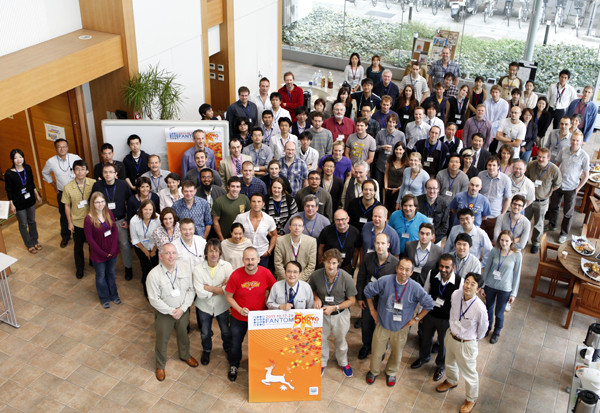
We are complex multicellular organisms composed of ~400 distinct cell types. This diversity of cell types allow us to see, think, hear, fight infections etc. yet all of this is encoded in the same genome. The difference between all these cells is what parts of the genome they use – for instance, neurons use different genes than muscle cells, and therefore they work very differently. In FANTOM5, we have systematically investigated exactly what are the sets of genes used in virtually all cell types across the human body, and the genomic regions which determine where the genes are read from. We used this information to build transcriptional regulatory models and atlases for every primary cell type that makes up a human.
FANTOM4
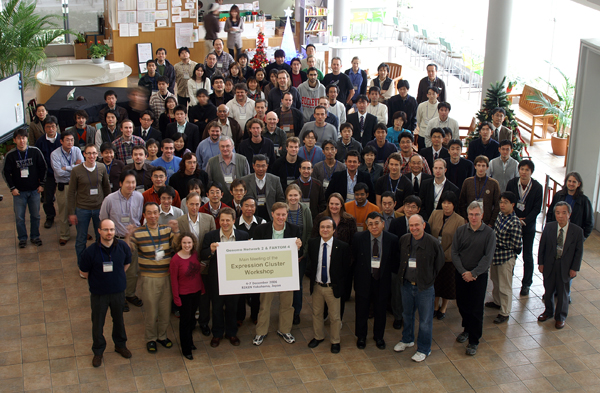
FANTOM4 used deepCAGE to monitor the dynamics of transcription start site (TSS) usage during a time course of monocytic differentiation. The expression levels from each promoter and transcription factor binding site predictions were then used to build a transcriptional regulatory network model (Suzuki et al. 2009). Additionally, transcription intitiation RNAs, the expression of the 'repeatome' and at atlas of combinatorial TF regulation were published in FANTOM4.
FANTOM3
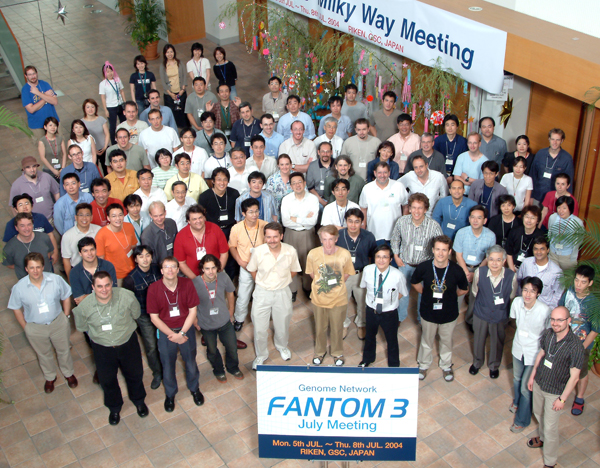
FANTOM consortium utilized a new technology, CAGE, to reveal that more than 63% of the genome — instead of the known ~1.5% fraction of protein coding exons — is transcribed as RNA. We also confirmed the existence of over 23,000 non-coding RNAs (ncRNAs) and that >73% of the transcriptional units show sense-antisense transcription. This work was published in a couple of papers in the “RNA special issue” of Science in 2005 (Carninci et al. 2005; Katayama et al. 2005)
FANTOM2
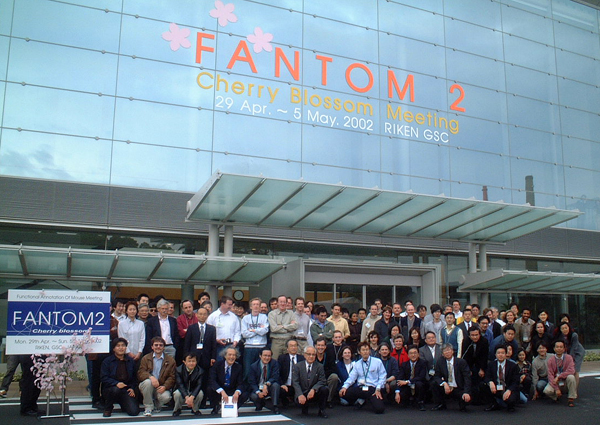
During the second phase of the FANTOM activities, we determined the base sequences and assigned functional annotations to a set of 60,770 full-length mouse cDNAs. This was the first project worldwide to standardize full-length mammalian cDNAs. The research was published in a special issue of Nature on the decoding of the mouse genome in 2002 (Okazaki et al. 2002)
FANTOM1
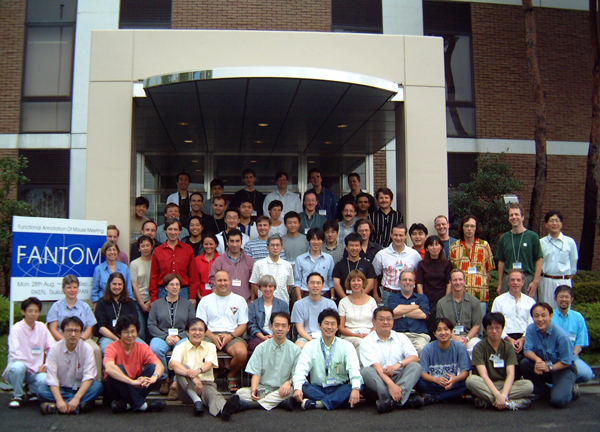
The consortium developed an effective system for functional gene annotation by designing appropriate rules and methods. The result was mainly published in Nature in 2001(Kawai et al. 2001). The paper was followed by the draft sequence of human genome (Lander et al. 2001) week later because they used our cDNA for gene number prediction.